Getting Around Peru: Transportation, Routes & Itinerary Planning
Peru’s landscapes are vast and varied, which means choosing the right transportation can make a big difference in how smoothly your trip unfolds. From short domestic flights between Lima and Cusco to scenic train journeys, mountain roads, and local taxis, this guide explains the best ways to move around the country and plan efficient itineraries. Whether you’re connecting major destinations, traveling into the Andes, or navigating busy cities, these FAQs will help you understand timings, routes, and what to expect along the way. You’ll also find references to our Machu Picchu Guide and Altitude FAQs pages to help you plan routes that match both logistics and elevation. If you’re still deciding how long to stay or where to begin, the Peru Travel FAQ offers a wider overview of planning essentials.
Transportation Between Cities
Should I fly to Lima or Cusco?
Fly into Lima first, then connect to Cusco for Machu Picchu and the Sacred Valley.
Jorge Chávez International Airport (LIM) in Lima is the busiest airport in Peru and the main international gateway, handling over 24 million passengers per year and offering direct flights from North and South America, Europe, and other regions. All scheduled international flights from the U.S. land in Lima, with onward connections to Cusco (CUZ) available throughout the day via multiple airlines. The flight from Lima to Cusco is typically 80–95 minutes. Cusco sits at over 3,400 meters (11,200 feet) and serves as the primary hub for travel to Machu Picchu and the Sacred Valley. Medical and government authorities recommend spending at least one or two nights in Cusco or the lower Sacred Valley before ascending further, to minimize the risk of altitude sickness.
Sources:
- Ministry of Foreign Trade and Tourism (MINCETUR), Peru
- Jorge Chávez International Airport yearly reports
- US CDC Travelers’ Health (cdc.gov)
- Peru Embassy and US Department of State travel advisories
Is there a train from Lima to Cusco?
No. There is no direct train from Lima to Cusco.
Lima and Cusco are separated by about 1,060 km (660 miles) of mountainous terrain, with no direct passenger rail service between them. Most travelers fly or take a long-distance bus to Cusco. Train journeys operate between Cusco, Puno, and Arequipa—most notably the PeruRail and Belmond Andean Explorer services. These rail routes are used for scenic, luxury travel and not as rapid transit between Lima and Cusco.
Sources:
- Official Peru Railways and Ministry of Transport (MTC)
- PromPerú (government tourism board)
How do I get from Lima to Machu Picchu?
Travel from Lima to Machu Picchu involves three stages: flight, train, and bus.
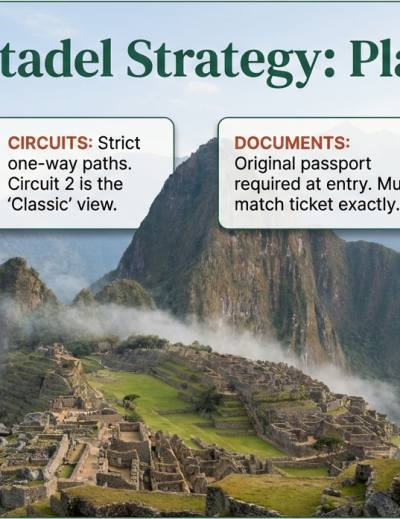
Travelers typically fly from Lima to Cusco (approx. 1.5 hours), then take a train from Cusco, Poroy, or Ollantaytambo to Aguas Calientes (Machu Picchu Pueblo). From Aguas Calientes, a Consettur bus takes 30 minutes to the Machu Picchu citadel entrance, or visitors may hike for about 1.5 hours on foot. The journey offers spectacular Andean scenery. There is no direct road or air route from Lima to Machu Picchu.
Sources:
- Ministry of Transport and Communications (MTC), Peru
- Official Machu Picchu site (machupicchu.gob.pe)
- PromPerú
How do I travel within Peru (bus, flight, car)?
The most efficient way to travel long distances is by domestic flight, followed by buses for budget travelers.
Domestic flights quickly connect Lima to Cusco, Arequipa, Trujillo, Piura, and Iquitos, with major airlines maintaining good safety records. Buses are popular for budget and overnight journeys, with companies like Cruz del Sur and Oltursa being government-certified for safety. Trains are primarily limited to tourist services (e.g., Cusco to Machu Picchu or Puno). Car rental is possible but not recommended for most, due to challenging road conditions outside major cities and less rigorous enforcement of traffic laws.
Sources:
- Ministry of Transport and Communications (MTC), Peru
- US Department of State Safety Recommendations
- PromPerú (official tourism)
Are domestic flights in Peru reliable?
Yes, domestic flights are generally reliable, though rainy season delays can occur.
Airlines such as LATAM, Sky Airline, and JetSmart meet international safety standards and maintain high punctuality. However, flights to/from Andean cities (especially Cusco and Juliaca) are most susceptible to rainfall or fog delays from November to March. Early-morning departures are best for avoiding weather disruptions, per official government travel alerts.
Sources:
- Ministry of Transport and Communications (MTC), Peru
- Jorge Chávez International Airport Statistics
- US Department of State
Is it safe to rent a car in Peru?
Renting a car is not recommended due to road safety and driving conditions.
The US and UK governments caution against driving independently in Peru due to unpredictable driver behavior, poorly marked roads, and challenging geography, especially in mountain and coastal areas. There are high accident rates outside main cities, and night driving is specifically discouraged. National-level bus and air transport is generally safer and more convenient.
Sources:
- US Department of State Travel Advisory
- UK FCDO Peru Travel Advice
- Ministry of Transport and Communications, Peru
How safe is public transportation in Peru?
Public transport safety varies — use reputable bus companies and authorized taxis.
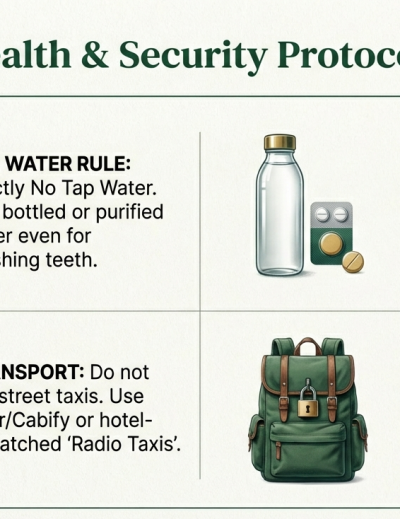
Reputable companies like Cruz del Sur, Oltursa, and Peru Hop are recognized by Peru’s Ministry of Transport for their safety standards, including two-driver requirements and GPS tracking. Accidents involving lower-tier companies do occur, and travelers are urged to pre-book with established providers. Taxis should be arranged via hotels, authorized stands, or apps, never hailed in the street, as advised by foreign embassies.
Sources:
- Ministry of Transport and Communications (MTC), Peru
- US State Department and Embassy Lima
- PromPerú
Local Travel
How to get around Lima or Cusco easily?
Use Uber, authorized taxis, or walking in historic areas.
Self-driving is discouraged due to congestion and parking shortages in Lima. Reliable options include hotel-arranged transfers, app-based rideshares (Uber, Cabify), and authorized taxis. In Cusco, the old town is easily walkable and combis (minibuses) provide cheap urban transport. Taxi fares should always be agreed upon before boarding, as most do not use meters.
Sources:
- Peru Tourism Board (PromPerú)
- Ministry of Transport and Communications (MTC), Peru
What is transportation like between airports and city centres?
Use authorized taxis or rideshares for airport transfers; avoid unlicensed options.
Prepaid taxi booths at Lima’s airport are monitored and recommended for international arrivals. Alternatively, Uber and Cabify operate legally from the arrivals area. Passengers should not accept unsolicited taxi offers to avoid scams and theft. In Cusco, hotels commonly arrange secure transport to and from the airport.
Sources:
- Ministry of Transport and Communications (MTC), Peru
- Official Jorge Chávez Airport guidance
- US State Department Travel Advisory
How do I get from Cusco to Ollantaytambo and then to Machu Picchu?
Take a car or bus from Cusco to Ollantaytambo, then a train to Aguas Calientes.
Most travelers first descend from Cusco to the Sacred Valley for acclimatization. Ollantaytambo is about 90 minutes by road from Cusco and is the main departure point for PeruRail and Inca Rail trains to Machu Picchu—a journey of 1.5 to 3.5 hours. Aguas Calientes (Machu Picchu Pueblo) is only accessible by rail or foot.
Sources:
- PromPerú (official tourism)
- Ministry of Transport and Communications, Peru
- Official Machu Picchu site (machupicchu.gob.pe)
How safe are night buses in Peru?
Night buses can be safe if using top-rated companies, but caution is advised.
Top-tier companies certified by Peruvian transport authorities (like Cruz del Sur, Oltursa, and Peru Hop) offer enhanced safety features and supervised drivers. However, the US State Department restricts its employees from overnight road travel outside major cities, reflecting elevated risk due to accidents and crime. Always select VIP or “cama” class seats, and keep valuables with you at all times.
Sources:
- Ministry of Transport and Communications (MTC), Peru
- US Department of State Travel Advisory
- PromPerú
Itineraries
How many days should I spend in Lima, Cusco, and the Sacred Valley?
Plan around 10–14 days for a complete itinerary, or 7 days for the highlights.
A rushed itinerary often includes 4–5 days covering Lima, Cusco, the Sacred Valley, and Machu Picchu but can feel hurried.
A balanced 7-day trip allows time in Lima (1–2 days), Cusco (3–5 days), and the Sacred Valley (1–2 days), with a visit to Machu Picchu and possibly Rainbow Mountain or a nearby attraction.
An ideal 10–14 day itinerary enables a relaxed exploration, including cultural sites, gastronomic experiences in Lima, trekking, and optional trips to the Amazon or Lake Titicaca region.
Sources:
- PromPerú (Peru’s Tourism Board)
- Ministry of Foreign Trade and Tourism (MINCETUR, gob.pe)
- US Department of State Travel Information
Is Lima worth visiting or should I go straight to Cusco?
Yes, Lima is absolutely worth visiting before heading to Cusco.
Lima offers rich colonial-era architecture such as the Plaza Mayor and churches, world-renowned gastronomy including cevicherías, and cultural attractions like the Larco Museum.
However, Cusco is the gateway city to Machu Picchu and the Andean highlands, so travelers pressed for time sometimes opt to spend only a night or less in Lima before flying to Cusco.
Sources:
- PromPerú
- Ministry of Foreign Trade and Tourism (MINCETUR)
- US Embassy Peru Travel Advisories
What are the top things to do in the Sacred Valley?
Explore Inca ruins, markets, and nature in one of Peru’s most scenic regions.
Key sites include the Ollantaytambo Fortress and Pisac archaeological complex.
Moray offers remarkable Inca agricultural terraces, and the Maras Salt Mines provide unique historic salt extraction methods.
Visitors can experience local culture at Awana Kancha alpaca sanctuary and vibrant markets, making the Valley an authentic, lower-altitude acclimatization area before Machu Picchu.
Sources:
- PromPerú
- Ministry of Culture, Peru
- UNESCO World Heritage Information
What are the best things to do in Peru besides Machu Picchu?
Peru offers a mix of adventure, heritage, and natural wonders beyond Machu Picchu.
Beyond Machu Picchu, Peru is famous for hikes like the Salkantay and Ausangate treks, the colorful Rainbow and Palccoyo mountains, and sandboarding in Huacachina.
Nature lovers can watch condors in Colca Canyon or explore the Nazca Lines by air.
Immerse in culture by visiting the colonial city centers of Cusco and Lima, cruising Lake Titicaca, or exploring the Amazon Rainforest from Puerto Maldonado or Iquitos.
Sources:
- PromPerú
- Ministry of Foreign Trade and Tourism (gob.pe)
- National Geographic
Is Arequipa worth visiting?
Yes. Arequipa is a highlight for travelers spending two weeks or more in Peru.
Known as the “White City” for its volcanic sillar stone architecture, Arequipa is a UNESCO World Heritage Site.
It is the gateway to Colca Canyon, one of the world’s deepest canyons, famous for condor sightings.
Luxury travelers can reach Arequipa from Cusco or Lake Titicaca via the Belmond Andean Explorer sleeper train.
Sources:
- UNESCO
- PromPerú
- Ministry of Foreign Trade and Tourism (gob.pe)
How far is Lake Titicaca from Cusco?
Lake Titicaca lies roughly 240 miles (385 km) from Cusco.
Most visitors spend 2–3 days traveling there, often combining train routes such as the Belmond Andean Explorer or PeruRail with buses or flights from Juliaca or Puno.
Lake Titicaca is renowned for its cultural heritage, including the floating reed islands inhabited by the Uros people.
Sources:
- Ministry of Foreign Trade and Tourism (gob.pe)
- PromPerú
- PeruRail
Can I visit the Amazon rainforest in Peru?
Yes, the Amazon covers two-thirds of Peru and is easily combined with Andean destinations.
Puerto Maldonado (Tambopata Reserve) is the closest jungle gateway from Cusco with short domestic flights.
Iquitos offers deep river cruise access and is reachable by air or boat.
Manu National Park, though remote, is accessible for biodiversity lovers.
A 10-day itinerary can comfortably include the Amazon alongside Cusco, Machu Picchu, and the Sacred Valley.
Sources:
- Ministry of Environment, Peru (MINAM)
- Regional tourism boards
- PromPerú
When is the best time to visit the Amazon in Peru?
The dry season (May–October) offers the best conditions for exploring.
These months feature less rain, lower humidity, and more accessible trails, making wildlife spotting optimal.También la temporada de lluvia (noviembre-abril) ofrece paisajes exuberantes y mayor nivel de ríos, ideal para observadores de aves y fotografía.
Mosquito activity peaks in the rainy season.
Sources:
- CDC Traveler’s Health
- Ministry of Environment, Peru
Can I visit both Machu Picchu and the Amazon in one trip?
Yes, combining both is very common, even on trips under 10 days.
A practical 10-day itinerary often includes Lima, Cusco, the Sacred Valley, Machu Picchu, and the Amazon.
Efficient domestic flights connect Cusco and Puerto Maldonado, making logistics manageable.
Health authorities advise the Yellow Fever vaccine for jungle regions.
Sources:
- Ministry of Health, Peru
- PromPerú
- CDC
What are the top UNESCO World Heritage Sites in Peru?
Peru’s top UNESCO sites include Machu Picchu, the Nazca Lines, and Chan Chan.
Machu Picchu is a world-renowned Inca citadel and New Seven Wonders of the World member.
The Nazca Lines are large desert geoglyphs visible from the air, while Chan Chan is a pre-Inca adobe city on the northern coast.
The historic center of Arequipa is another cultural site recognized by UNESCO.
Sources:
- UNESCO World Heritage Centre
- Ministry of Culture, Peru
- PromPerú
Are there any festivals worth planning around?
Yes, Peru’s festivals blend Inca and Catholic traditions, offering vibrant experiences.
Inti Raymi, or Festival of the Sun, held on June 24 in Cusco, is the most famous Inca heritage celebration.
Mistura in Lima (September/October) is Latin America’s premier food festival.
Semana Santa and Christmas feature colorful parades and markets, especially in Cusco.
Festivals attract large crowds, so early bookings are recommended.
Sources:
- Ministry of Culture, Peru
- PromPerú
- Local tourism offices
How do I combine Machu Picchu with the Galápagos or Bolivia’s Uyuni Salt Flats?
Many operators offer multi-country tours combining Peru with Ecuador or Bolivia.
Grouped 10–12 day tours typically fly between Lima or Cusco to Quito or Guayaquil for Galápagos, or travel overland to Bolivia for Lake Titicaca and Uyuni Salt Flats.
These itineraries suit travelers wanting to cover multiple South American highlights.
Sources:
- PromPerú
- Ecuadorian and Bolivian tourism boards
- Licensed tour operators
Is it possible to combine a trip to Bolivia or Ecuador with Peru?
Yes, it’s common and well-connected by air and land.
Lake Titicaca offers a shared water border; flights connect Cusco to Quito.
Multi-country “Andean Explorer” tours often include Peru, Bolivia, and Ecuador in one package.
Sources:
- Ministry of Foreign Trade and Tourism, Peru
- Bolivian Tourism Board
- Ecuador Tourism Board
What are the best off-the-beaten-path places in Peru?
Beyond the classics, explore Choquequirao, Northern Peru, or the Amazon.
Choquequirao, an Inca site rivaling Machu Picchu but requiring a challenging trek, is ideal for adventurers.
Northern Peru offers Kuelap fortress, Gocta Waterfall, and significant archaeological sites around Chiclayo.
Less-visited Nazca Lines and Chan Chan provide pre-Inca history.
The Amazon Basin, with its vast wilderness, appeals to eco and wildlife travelers seeking immersion beyond tourism hubs.
Sources:
- PromPerú
- Ministry of Culture, Peru
- UNESCO
Once you understand the main transportation options and distances between Peru’s key destinations, planning your itinerary becomes much easier. Choosing when to fly, when to take a train, and when to rely on buses or taxis helps you save time, stay comfortable, and make the most of each region. After reviewing this guide, you can continue shaping your trip with our detailed FAQs on Peru’s Etiquette, Typical Food and Drinks, and further Smart Travel Tips, which offer practical advice on staying safe during travel days, managing elevation changes, and navigating popular routes. With the right planning, getting around Peru becomes part of the adventure rather than a challenge.