

Regional Guide to October 2026 Events and Festivals in Japan
October in Japan is a vibrant month filled with diverse regional festivals and events, ranging from traditional harvest celebrations to unique cultural spectacles. Pleasant weather and the first hints of fall foliage make it a popular time to explore different parts of the country. Here are the regional highlights of October across Japan.
Kanto region (eastern Japan)
Tokyo Yosakoi (Ikebukuro, Tokyo)
Held in October in Ikebukuro, this lively festival forms the second half of the Fukuro Festival. Over 5,000 dancers across more than 100 teams take part, making it the largest Yosakoi festival in the area. Yosakoi is a modern dance style that originated in Kochi Prefecture, blending traditional elements with energetic music, colorful costumes, and naruko (wooden hand clappers).
Kawagoe Festival (Kawagoe, Saitama Prefecture)
Also known as the Kawagoe Hikawa Festival, this takes place every year on the third Saturday and Sunday of October, which puts it on October 17 and 18, 2026. Centered on Kawagoe City’s historic Kurazukuri district, this festival, over 370 years old, fills the town with a parade of elaborate dashi floats carved with intricate detail and topped with towering dolls. Accompanied by ohayashi music, the highlight is “Hikkawase,” where floats meet and engage in spirited musical battles. Mikoshi processions and food stalls round things out. It’s a National Important Intangible Folk Cultural Property and part of the UNESCO-listed “Yama, Hoko, Yatai, Float Festivals in Japan.”
Kanuma Buttsuke Autumn Festival (Kanuma City, Tochigi Prefecture)
Held on the second Saturday and Sunday of October, October 10 and 11, 2026, centered on Imamiya Shrine, this 400-year-old festival commemorates past hardships and prays for peace and a good harvest. Hand-carved wooden floats (yatai) parade through the streets, and the highlight, “buttsuke,” is a musical showdown where floats compete head to head, accompanied by taiko drumming. The floats are lit up in the evening. Like Kawagoe, it’s a National Important Intangible Folk Cultural Asset and part of the UNESCO “Yama, Hoko, Yatai” inscription.
Sawara Grand Festival (Katori City, Chiba Prefecture)
The autumn half of this festival, the Suwa Shrine Aki Matsuri, is held every year on the weekend surrounding the second Saturday of October, October 9 to 11, 2026, in the Shinjuku district of Sawara. Over 300 years old, it’s one of the largest float festivals in Kanto, with 14 floats standing nearly five meters tall and topped with equally tall dolls. The floats are accompanied by “Sawara-bayashi,” considered one of Japan’s three greatest festival musical traditions, and the “Nono-ji-mawashi” float-spinning maneuver is a highlight. At night, lantern-lit floats reflected in the Ono River make for one of Kanto’s more atmospheric festival scenes. It’s a UNESCO Intangible Cultural Heritage listing and an Important Intangible Folk Cultural Property.
Tohoku region (northern Honshu)
Nihonmatsu Lantern Festival (Nihonmatsu, Fukushima Prefecture)
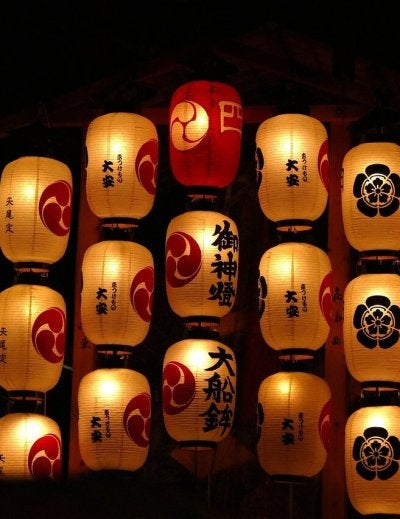
This annual shrine festival runs the first Saturday, Sunday, and following Monday of October, October 3 to 5, 2026, centered on Nihonmatsu Shrine. Over 370 years old, its main attraction is a procession of seven towering taikodai floats, up to 11 meters high, each strung with around 300 real-candle paper lanterns. Moved entirely by human power to energetic chants and drumming, the first evening (“Yoi Matsuri”) is the highlight. It’s considered one of Japan’s three largest lantern festivals.
Chubu region (central Japan)
Takayama Autumn Festival (Takayama, Gifu Prefecture)
Also known as the Hachiman Festival, this runs every year on October 9 and 10, centered on Sakurayama Hachimangu Shrine in Takayama’s old town. It’s a thanksgiving celebration for the autumn harvest and preparation for winter, recognized as one of Japan’s three most beautiful festivals and part of the UNESCO Intangible Cultural Heritage list. Eleven elaborate yatai floats, some dating to the 17th century, parade through town carved with intricate detail and fitted with karakuri ningyo (mechanical dolls) that perform twice daily. Hundreds of participants in traditional kamishimo costumes join a mikoshi procession, lion dance, and gong performances. The evening festival (Yoimatsuri) on October 9 is especially striking, with each float lit by around 100 lanterns.
Seki Cutlery Festival (Seki, Gifu Prefecture)
Held on the second Saturday and Sunday of October, October 10 and 11, 2026, this celebrates Seki City’s 700-year history as “The City of Blades.” It’s Japan’s largest cutlery festival, with a discounted “Cutlery Great Bargain Market,” an outdoor knife show featuring the latest factory-made and custom pieces, and traditional swordsmithing demonstrations. Martial arts demonstrations (Iaido, Battojutsu), taiko drumming, and hands-on knife sharpening round out the program.
Kansai region (western Japan)
Jidai Matsuri (Kyoto)
Kyoto’s “Festival of the Ages,” one of the city’s three great festivals, takes place every October 22, a date commemorating Kyoto’s founding in 794. Around 2,000 participants in painstakingly accurate costumes, alongside roughly 70 horses and two oxen, represent figures and eras from the Meiji Restoration back to the Heian Period, walking in reverse chronological order from the Kyoto Imperial Palace to Heian Jingu Shrine. Established in 1895 to mark Kyoto’s 1,100th anniversary as the former capital, the parade runs roughly two hours.
Kurama Fire Festival (Kurama, Kyoto)
Also on October 22 every year, this dramatic fire festival (Kurama no Hi Matsuri) takes place in the mountain village of Kurama, north of Kyoto, centered on Yuki-jinja Shrine. Starting at dusk (around 6:00 PM) and running until midnight, it reenacts a ceremony from 940 AD welcoming the shrine’s spirits. It builds from small torches lit at each house to a procession of hundreds carrying large pine torches, some weighing up to 100 kg, worn with traditional loincloths and rope skirts. The night climaxes with two mikoshi, weighing 500 kg to a ton, carried down the shrine’s steps. It’s registered as a Japanese “intangible folk-culture property,” though it isn’t on the UNESCO list.
Nada no Kenka Festival (Himeji, Hyogo Prefecture)
This “fighting festival” at Matsubara Hachiman Shrine in Shirahama Town, Himeji City, runs every October 14 and 15. Known as one of Japan’s most vigorous Shinto festivals, it draws 100,000 to 150,000 visitors to watch three mikoshi and seven two-ton yatai floats, carried by teams from seven districts, forcefully crash into each other, believed to please the gods. Day one involves preparing and blessing the yatai, while day two features the main mikoshi and yatai clashes. It’s designated an Important Intangible Folk Cultural Property of Hyogo Prefecture.
Chugoku region (western Honshu)
Bizen Pottery Festival (Bizen City, Okayama Prefecture)
Held on the third Saturday and Sunday of October, October 17 and 18, 2026, in the Imbe area around Imbe Station, this draws roughly 100,000 pottery enthusiasts. It’s a chance to browse and buy Bizen ware, a distinctive unglazed pottery dating to the Heian period, often at a 20 percent discount, try a potter’s wheel, attend a tea ceremony, and watch the “Kaberi Daimatsu” flame ritual on the festival’s eve. Bizen ware is certified Japanese Heritage and recognized as one of Japan’s “Six Ancient Kilns.”
Shikoku region
Niihama Taiko Festival (Niihama, Ehime Prefecture)
Known as the “Men’s Festival,” this fixed-date festival runs October 16 to 18 every year across Niihama City, including Yamane sports field and Ikku Shrine. Dozens of massive taiko-dai (drum floats), around 5.5 meters high and weighing 2.5 to 3 tons, are decorated in gold-thread embroidery and paraded by teams of roughly 150 men. The “kakikurabe” float-lifting competition, where teams hoist their taiko-dai onto their shoulders without wheels, is the highlight, sometimes accompanied by “funamiyuki,” floats carried into the sea as an offering, though that part isn’t guaranteed every year.
Kyushu region (southern Japan)
Nagasaki Kunchi (Nagasaki City, Nagasaki)
This 400-year-old festival of Suwa Shrine runs three days starting October 7 every year, so October 7 to 9, 2026. It reflects Nagasaki’s history as a trading port, blending Chinese influence (dragon and lion dances, Chinese-style boat floats) with Dutch-inspired elements (Oranda Manzai comedy, Dutch-style floats). Different city districts rotate performances on a seven-year cycle, so the specific acts on show vary year to year.
Miyazakijingu Festival (Miyazaki)
Typically held in late October, this festival commemorates the legendary Emperor Jimmu with a “procession of the gods” featuring vibrant floats and participants in traditional dress, some on horseback.
Okinawa region (southern islands)
Paantu Festival (Miyakojima, Okinawa)
This ancient purification ritual takes place in early October, with exact dates announced only shortly beforehand since it follows the ninth month of the lunisolar calendar. Held in the Shimoji district and the Nobaru area of Ueno on Miyakojima Island, male villagers dress as “Paantu,” supernatural beings covered in mud, vines, and wooden masks, and roam the village smearing sacred mud on people, new homes, and vehicles to ward off evil spirits and bring good health. It’s a UNESCO Intangible Cultural Heritage listing (2018) and an Important Intangible Folk Cultural Property of Miyakojima.
Hokkaido region (northern Japan)
Sapporo Autumn Fest (Sapporo, Hokkaido)
Hokkaido’s largest food festival runs September 12 to October 4, 2026, across multiple blocks of Odori Park. It draws over two million visitors annually to more than 300 stalls showcasing Hokkaido’s produce, seafood, and local delicacies alongside craft beer, wine, sake, and sweets, split into themed zones. It’s recognized as one of Sapporo’s four major seasonal festivals.
Exoticca’s Treasures of Japan: The 360 Experience tour spends time in several of the regions covered here, including Kansai and Chubu, making it a solid base for building a festival-focused trip around this month.

Leave a Reply
You must be logged in to post a comment.