Cartagena de Indias: Exoticca travel guide
Cartagena de Indias doesn’t ease you in. You land on Colombia’s Caribbean coast and within an hour you’re walking inside 16th-century coral-stone walls, past balconies dripping with bougainvillea, toward a plaza that was once a slave market and is now lined with candy vendors. Locals call it La Heroica, the Heroic City, for good reason: it survived Francis Drake, a 23,000-man British invasion fleet, and a fifteen-month siege, and came out the other side as one of the best-preserved colonial ports in the Americas.
This guide is the starting point. Everything below links out to a deeper dive, so treat it as the map, not the whole trip.
Quick facts
- Location: Bolívar department, Colombia’s northern Caribbean coast
- Population: over 900,000, Colombia’s fifth-largest city
- UNESCO status: the walled city and fortifications, designated in 1984
- Climate: tropical, 27-30°C year-round, dry season December to April
- Known as: La Heroica, El Corralito de Piedra, La Fantástica
A city built on defiance
Long before the Spanish arrived, the Puerto Hormiga culture was making some of the oldest ceramics in the Americas around this bay, as far back as 4000 BC. Pedro de Heredia founded the Spanish city in 1533, and its sheltered harbor made it the main gateway for shipping Bolivian silver to Spain, which also made it a target. Francis Drake ransomed it in 1586. French privateers plundered it in 1697. And in 1741, Spanish commander Blas de Lezo, with roughly 2,800 men and 6 ships, held off a British force of 186 ships and over 23,000 men under Admiral Edward Vernon, one of the more lopsided defensive stands in colonial history.
Independence came in 1811, but it was hard-won: a royalist siege in 1815 killed over a third of the population through famine and disease before Simón Bolívar’s forces liberated the city for good in 1821. That’s the short version, the full history of Cartagena covers Blas de Lezo’s stand against Vernon and the siege that followed in more depth.
Where to stay: five neighborhoods, one city
Cartagena isn’t one experience, it’s five, and picking the right base changes the trip:
- El Centro & San Diego, inside the walls: colonial mansions, the Clock Tower, Palace of the Inquisition, San Pedro Claver. Best for culture-focused travelers who want to walk everywhere.
- Getsemaní: the old working-class, Afro-Colombian quarter, now known for street art and nightlife. Best for younger travelers and digital nomads.
- Bocagrande & El Laguito: the high-rise beach strip, developed in the 1950s and now dubbed “the Miami of Colombia.” Best for families who want beach access and international hotel chains.
- Castillogrande: quieter, high-income, bay-facing, with a calm boardwalk loop. Best for travelers who want beach without the Bocagrande crowds.
- Manga Island: leafy, residential, full of early-20th-century Republican mansions (one inspired Gabriel García Márquez’s Love in the Time of Cholera). Best for long stays and expats.
What to see: the walled city and San Felipe Castle
Most first-time visits center on two things. Inside the walls, the historic core packs in the Torre del Reloj gate, Las Bóvedas (23 vaults built as an ammunition depot, now a handicraft market), and the Iglesia de San Pedro Claver, where the remains of the priest known as “Slave of the Slaves” rest after his 40 years ministering to enslaved Africans.
Outside the walls, on San Lázaro Hill, sits Castillo San Felipe de Barajas, the largest Spanish military fortress ever built in the Americas. Its tunnels were designed to amplify footsteps, so defenders could hear enemies coming underground before they surfaced. It resisted the same 1741 Vernon assault that Blas de Lezo repelled at sea.
What to eat: Cartagena’s Caribbean table
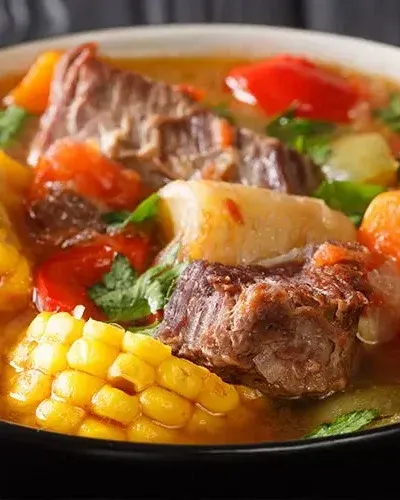
Food here is where African, Indigenous, and Spanish influences actually meet on a plate: double-fried snacks and coconut from African heritage, cassava and corn from Indigenous staples, citrus and garlic marinades from Spain. Start with an arepa de huevo from a street stall, then work up to Posta Negra Cartagenera, a beef roast slow-cooked in panela and, unusually, Coca-Cola, the closest thing the city has to a signature main course. There’s a lot more on the plate than that, covered in the full food guide.
Beyond the city: Barú and Tierra Bomba
Cartagena’s best beaches aren’t really in Cartagena. Two islands sit just offshore, and they serve very different trips.
Isla Barú is where the postcard beaches are. Playa Blanca, its famous strip of white sand and turquoise water, is also the most commercialized, expect vendors and crowds. Quieter alternatives like Agua Azul or Playa Manglares sit a short walk away, and the island also holds the National Aviary of Colombia (1,700+ birds across 170 species) and Cholón Bay, a shallow lagoon that turns into a floating party scene of anchored boats and beach music. It’s reachable by a 45-minute speedboat from La Bodeguita dock, or by road since a 2014 bridge connected it to the mainland at Pasacaballos, oddly enough, Barú was a natural peninsula until Spanish colonizers cut the Canal del Dique through it in 1650, turning it into an island by accident.
Tierra Bomba is the closer, quicker option, about 10-15 minutes by boat from Bocagrande, and it’s built around history rather than sand. This is where Spain built its Bocachica defensive grid: Castillo San Fernando and Fort San José face each other across the narrow channel that Spanish ships were forced through after Bocagrande’s main entrance silted up and was sealed. The beaches here are calmer and golden rather than white, with boutique beach clubs concentrated on the southwest coast.
Short version: go to Barú for the classic beach day, go to Tierra Bomba for a faster trip that mixes a swim with colonial military history. More on choosing between the two, including how to actually get to each, in the Barú vs. Tierra Bomba guide.
Getting around
Walking covers most of what you’ll want inside the historic core, it’s roughly 1 km by 0.8 km. For anything further, the Transcaribe BRT runs on a rechargeable card (2,300 COP a ride), with the T103 route connecting Bocagrande to the historic center. Taxis run on flat zone tariffs rather than meters, and Uber and InDriver both operate widely.
Best time to go, and what it costs
Dry season (December to April) is peak season: clear skies, lower humidity, higher prices. May, and September through November, bring more rain but 20-30% lower accommodation costs.
Daily budgets range widely:
- Backpacker: $40-65 USD/day, hostel dorms in Getsemaní, street food, public transport
- Mid-range: $90-140 USD/day, 3-star hotels in San Diego or Bocagrande, sit-down restaurants, paid monument entries
- Luxury: $180-300+ USD/day, converted convent hotels like the Sofitel Santa Clara, tasting menus at Celele or Carmen, private yacht charters to the Rosario Islands
Plan the trip
Three days is enough to cover the walled city, San Felipe Castle, and a beach afternoon. Five lets you add Getsemaní’s nightlife properly and a day trip out to the islands. A full 3 to 5 day itinerary lays out what to do each day.
See it with a guide
Exoticca’s Colombia trips pair Cartagena with the rest of the country, Medellín, Bogotá, the Coffee Axis, or the island of San Andrés, rather than offering it as a standalone city break. Once in Cartagena, the included itinerary typically covers a panoramic tour through Bocagrande, Castillogrande and Manga on the way to Castillo San Felipe and the walled city, plus a stop at San Pedro Claver Church. Depending on the trip, that’s paired with a full day out to the Rosario Islands (speedboat past the San Fernando and San José forts, a beach day, and a seafood lunch), a guided walk through Getsemaní, or a sunset catamaran cruise out of La Bodeguita dock. Some itineraries also offer optional add-ons like a Colombian cooking class, a coconut-souvenir workshop supporting a local women’s collective, or day trips to Barú or Tierra Bomba Island.
See all of Exoticca’s Colombia trips to find the itinerary that fits.