

Barcelona in a week: the perfect 7-day Catalonia itinerary
Seven days is enough time to treat Barcelona as a base rather than the whole trip. This itinerary spends the first four days on the city’s Modernista landmarks, old town, and neighborhoods, then dedicates full days to two of Catalonia’s essential day trips: Montserrat and Girona. This itinerary belongs to our guide of Barcelona with several proposed trips depending on the available days and your trip style.
Barcelona in a week: itinerary overview
| Day | Focus | Highlight |
|---|---|---|
| 1 | Modernista landmarks | Casa Batlló, Sagrada Família |
| 2 | Gardens and neighborhoods | Park Güell, Gràcia, Poblenou |
| 3 | Old town and markets | Las Ramblas, Gothic Quarter |
| 4 | Art and the coast | Picasso Museum, Barceloneta |
| 5 | Day trip: Montserrat | Black Madonna, Sant Jeroni hike |
| 6 | Montjuïc and Olympic legacy | MNAC, Magic Fountain |
| 7 | Day trip: Girona | Medieval old town, Jewish Quarter |
Map: your 7-day Barcelona and Catalonia route
Use this map to see the full week’s route at a glance, including the Montserrat and Girona day trips, before diving into the day-by-day details below.
Before you go
The best window for a week-long trip is late spring (April to June) or early autumn (September to October), avoiding peak summer heat and crowds. The Aerobús gets you from the airport to Plaça de Catalunya in about 35 minutes. For a stay this long, a multi-day Hola Barcelona Travel Card covers unlimited Metro, bus, and regional train access, useful for the Montserrat and Girona day trips. Book Sagrada Família, Park Güell, and Picasso Museum tickets online well in advance, all three sell out their timed-entry slots regularly. Stay alert for pickpockets on Las Ramblas and on the Metro.
Day 1: Modernista landmarks
Morning: Casa Batlló and the Block of Discord
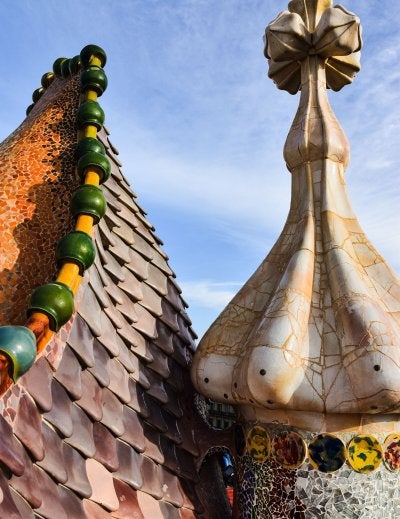
Start at Plaça de Catalunya and head north up Passeig de Gràcia to the Block of Discord, where Casa Batlló, Casa Amatller, and Casa Lleó i Morera sit side by side. Give Casa Batlló, nicknamed the “House of Bones,” about an hour, and look for the sea-themed stairwell where a gradient of blue tiles spreads natural light through the building.
Afternoon: the Sagrada Família
Continue to the Sagrada Família, Gaudí’s unfinished basilica, targeted for completion around 2026 (though the timeline has shifted before). Compare the naturalistic Nativity Façade with the sharper, angular Passion Façade, and look up inside at the tree-like columns and stained-glass light.
Evening: cocktails or a rooftop view
Close the day at Sips, ranked third in the World’s 50 Best Bars in 2022, or head to a rooftop like 360º at Barceló Raval or Terraza Martínez for a sunset view over the skyline.
Pro tip: Book Casa Batlló’s early-bird slot (around 8:30 AM) to see the interior before the main crowds.
Day 2: gardens and neighborhoods
Morning: Park Güell
Arrive early at Park Güell to beat the crowds and the midday heat. Visit the Dragon Stairway and its mosaic salamander, the Hypostyle Room’s 86 columns, and the Serpentine Bench, covered in trencadís mosaic, for a wide view over the city.
Afternoon: Gràcia and Poble Nou
Spend the afternoon in Gràcia, a former independent village with a bohemian, small-town feel and independent boutiques. Then head to Poble Nou, where 19th-century textile factories have been converted into art studios and tech offices, a clean-lined contrast to the morning’s Modernista curves.
Evening: sunset at the Bunkers del Carmel
Finish at the Bunkers del Carmel, a former military position turned viewpoint, for one of the city’s best panoramas as the sun sets over the Mediterranean and the Collserola hills.
Local insight: Gràcia is a good spot for small-batch, independent fashion away from the main international retail chains.
Day 3: old town and markets
Morning: Las Ramblas and La Boqueria
Walk Las Ramblas from the central squares down toward the waterfront. Stop at Mercat de la Boqueria, one of Europe’s oldest markets, for fresh juice or a plate from El Quim de la Boqueria.
Afternoon: the Gothic Quarter
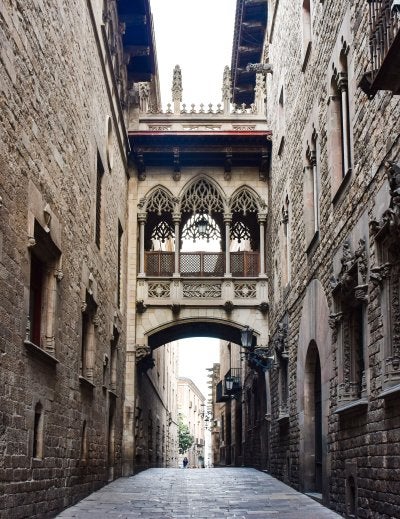
Work through the narrow streets of the Gothic Quarter to Barcelona Cathedral. Inside, the cloister garden keeps 13 white geese, a tradition tied to the age at which Santa Eulàlia was martyred. Beyond the cathedral, look for the remains of the Roman wall and the Temple of Augustus.
Evening: tapas in El Born
Book a guided tapas tour through El Born for patatas bravas, Iberian ham, and cava at spots like El Xampanyet or Quimet & Quimet.
Pro tip: Stop at Carrer Petritxol, the city’s “Chocolate Street,” for hot chocolate and churros at a historic granja.
Day 4: art and the coast
Morning: the Picasso Museum
Return to El Born for the Picasso Museum, spread across five adjoining medieval palaces with a collection of more than 4,000 works from Picasso’s formative years. Afterward, tour the Palau de la Música Catalana, the only Art Nouveau concert hall on the UNESCO World Heritage list.
Afternoon: Parc de la Ciutadella and Arc de Triomf
Walk through Parc de la Ciutadella, home to the Cascada Monumental fountain, which a young Antoni Gaudí helped design. Finish at the Arc de Triomf, built as the entrance gate for the 1888 International Exhibition.
Evening: seafood paella at Barceloneta
Head to Barceloneta Beach for an evening seafood paella at a spot like Can Majó or La Mar Salada.
Don’t miss: The MOCO Museum in El Born has a contemporary art collection that includes works by Banksy.
Day 5: day trip to Montserrat
Take the R5 train from Plaça Espanya, then the Aeri cable car or the Cremallera rack railway up to Montserrat Monastery, set high in the range’s jagged limestone peaks. Inside the basilica, see the 12th-century Black Madonna, known locally as La Moreneta. If you arrive before 1:00 PM on a weekday, you can hear the Escolania Boys’ Choir, one of the oldest in Europe. For a more active day, hike the Sant Jeroni trail to the range’s highest point (1,236m) for 360-degree views across Catalonia toward the Pyrenees.
Pro tip: Book a timed-entry ticket in advance if you want to climb the stairs and see the Black Madonna up close.
Day 6: Montjuïc and Olympic legacy
Morning: Montjuïc Castle and the Olympic Ring
Take the cable car up Montjuïc Hill to the 17th-century Montjuïc Castle, then head into the Olympic Ring to see the 1992 stadium and the Joan Antoni Samaranch Olympic and Sports Museum.
Afternoon: MNAC
Visit the National Art Museum of Catalonia (MNAC), housed in the Palau Nacional, for its Romanesque frescoes and Modernista decorative arts, including furniture designed by Gaudí. The museum’s terrace is a good sunset spot.
Evening: Flamenco and the Magic Fountain
Close the day with a Flamenco show at a tablao such as Tablao Cordobés, then catch the Magic Fountain at the base of Montjuïc, a free synchronized water, light, and music show most evenings. Schedules change frequently, so it’s worth confirming the current showtimes closer to your visit.
Day 7: day trip to Girona
Take the high-speed AVE train from Barcelona Sants to Girona, about 38 minutes on the fastest service. Walk the elevated medieval city walls for views over the rooftops, and explore the Barri Vell, home to one of Europe’s best-preserved Jewish Quarters. Girona’s cathedral steps and the Arab Baths both appear as filming locations from Game of Thrones Season 6. Before heading back, cross the Pont de les Peixateries Velles, better known as the “Eiffel Bridge,” built by Gustave Eiffel’s company about a decade before the Eiffel Tower.
If you have more time
- Sitges: a coastal town roughly 40 km south, known for its beaches and whitewashed old town.
- Salvador Dalí Museum: a dedicated trip north to Figueres for the artist’s theater-museum.
- Mount Tibidabo: reachable by the Blue Tram and funicular, home to the Temple of the Sacred Heart and a historic amusement park.
- Cadaqués: a fishing village on the Costa Brava, with the Camí de Ronda coastal trail leading to quiet coves.
For travelers weighing a longer, multi-region trip, our all-inclusive Spain packages with airfare can simplify the logistics.
FAQ: Barcelona in a week
Is a week enough time for Barcelona and Catalonia?
Yes. Seven days covers the city’s main landmarks plus two full day trips (Montserrat and Girona), which is enough to get a real sense of the wider region, not just the city center.
How should I split a week in Barcelona?
Spend the first four days in the city (Modernista landmarks, old town, neighborhoods, coast), then use days five through seven for day trips to Montserrat, Montjuïc, and Girona.
Do I need to book tickets in advance?
Yes, for the Sagrada Família, Park Güell, Picasso Museum, and Montserrat’s Black Madonna viewing. All use timed-entry tickets that sell out, especially June through September.
What if I only have 3 or 4 days instead of a week?
Drop the Montserrat and Girona day trips and focus on the city. See the Barcelona in 3 days itinerary for a shorter version of days 1 through 4.
Also worth reading
For a deeper focus on food, the Barcelona food and culture itinerary covers cooking classes and “Chocolate Street” in more depth. On a tighter schedule, the Barcelona long weekend itinerary condenses the city highlights into 72 hours. For more trails through Collserola Natural Park, the Barcelona adventure itinerary has additional hiking routes.

Leave a Reply
You must be logged in to post a comment.