

Barcelona itinerary guide: how to plan your trip, day by day
Barcelona sits between the Mediterranean Sea and the green ridges of the Serra de Collserola, a setting that forced the city to grow in layers rather than sprawl. Roman Barcino, the medieval Gothic Quarter, and the 19th-century Eixample (built on the Cerdà Plan) all sit within walking distance of each other, which is why the right itinerary depends less on “what to see” and more on “how much time you have.”
This guide breaks Barcelona down by duration and by travel style, so you can pick the version that matches your trip and jump straight into the detailed itinerary for it.
Quick answer: which Barcelona itinerary should you follow?
| Your situation | Best itinerary | Highlight |
|---|---|---|
| Layover or single day | Barcelona in 1 day | Passeig de Gràcia to Sagrada Família |
| Short city break | Barcelona in 2 days | Park Güell at opening time |
| First-time visit | Barcelona in 3 days | Gothic Quarter, Montjuïc, Barceloneta |
| Want the wider region too | Barcelona in a week | Day trip to Montserrat |
| Fri–Sun trip | Barcelona long weekend | El Born tapas crawl |
| Traveling with kids | Barcelona for families | CosmoCaixa science museum |
| Traveling alone | Barcelona for solo travelers | Group paella class |
| Traveling as a couple | Barcelona for couples | Sunset at Bunkers del Carmel |
| Watching costs | Budget Barcelona | Free Girona city walls |
| Food-focused trip | Barcelona food and culture | La Boqueria and Carrer Petritxol |
| Hiking and outdoors | Barcelona adventure itinerary | Sant Jeroni trail, Montserrat |
| High-end trip | Luxury Barcelona | Passeig de Gràcia’s Golden Mile |
How long should you stay in Barcelona?
Three days is the minimum most visitors need to get a real feel for the city. In 72 hours, you can split your time by area and theme: one day for the Ciutat Vella’s history, one for the Modernista landmarks, one for the coastal hills. If you only have 24 hours, focus on the “Golden Axis,” the direct route from Plaça de Catalunya through the Eixample’s major monuments.
If you want to see the wider region, plan for a week or more. That gives you time to leave the city center for slower day trips to Montserrat’s limestone peaks or Girona’s medieval streets. Barcelona’s high-speed rail and transit network make even short visits efficient, but a longer stay is what lets you get past the main sights and into neighborhoods like Gràcia or the newer tech district of Poble Nou.
Barcelona in 1 day
One day is enough to see Barcelona’s most iconic landmarks if you follow a single efficient route. Start at Plaça de Catalunya, the city’s transport hub, then walk up Passeig de Gràcia past the “Block of Discord,” where several architects competed to outdo each other on the same street. The route ends at the Sagrada Família, tracing the city’s shift from private Modernista homes to Gaudí’s unfinished basilica.
The highlight of the day is the rooftop of Casa Batlló, where the ceramic “dragon’s back” tiles show Gaudí’s habit of borrowing shapes directly from nature.
Read the full Barcelona in 1 day itinerary →
Barcelona in 2 days
Two days lets you add Park Güell and the Gràcia neighborhood to the one-day route, and see how Modernisme was about public housing and civic life as much as architecture. It’s a slower pace than the one-day version, with room to explore beyond the main monuments.
The highlight is arriving at Park Güell early, before the midday crowds, to sit on the tiled serpentine bench with a clear view over the city to the sea.
Read the full Barcelona in 2 days itinerary
Barcelona in 3 days
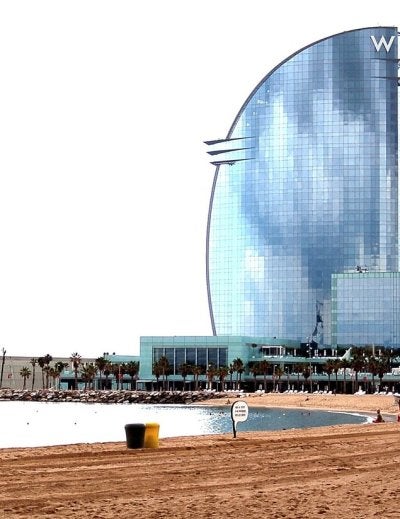
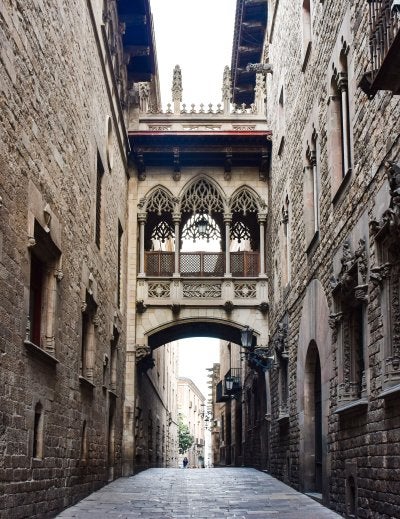
Three days is the itinerary most first-time visitors should follow. It balances the Gothic Quarter’s medieval streets with the views from Montjuïc and a stop at Barceloneta beach, without the transit fatigue of trying to cram it into less time. It’s also the right length to pair the city’s Roman roots with its 1992 Olympic legacy.
The highlight is the cable car ride up Montjuïc to the National Art Museum of Catalonia (MNAC), housed in a palace built for the 1929 International Exposition.
Read the full Barcelona in 3 days itinerary
Barcelona in a week
Seven days lets you treat the city center as a base rather than the whole trip. You can dedicate specific days to neighborhoods like Sarrià and Sant Gervasi, climb Mount Tibidabo, or take on day trips to sites an hour or more outside the city.
The highlight of a week-long stay is a full day trip to the monastery of Montserrat to see the Black Madonna and hear its boys’ choir, one of the oldest in Europe.
Read the full Barcelona in a week itinerary
Barcelona long weekend
A long weekend (typically Friday to Sunday, around 72 hours) is built for travelers who want the major landmarks plus the city’s food and nightlife, without the full week commitment. It splits time between the historic streets of El Born and the converted industrial spaces of Poble Nou.
The highlight is a sunset tapas crawl through El Born’s medieval alleys, working through Iberian ham, patatas bravas, and other Catalan staples.
Read the full Barcelona long weekend itinerary
Barcelona for families
Barcelona works well with kids if you structure the day as “museum morning, park afternoon” rather than trying to sightsee straight through. Parc de la Ciutadella is a reliable afternoon reset point, and the city’s public spaces are generally easy to navigate with a stroller.
A strong pick for families is CosmoCaixa, an interactive science museum with an indoor recreation of a flooded Amazonian forest.
Read the full Barcelona itinerary for families
Barcelona for solo travelers
Solo travel in Barcelona is straightforward: the center is compact, walkable, and served by an easy-to-use Metro and Aerobús connection to the airport. Group activities like guided walks or cooking classes are the easiest way to add social contact to a solo trip, and Eixample and Gràcia are generally considered safe, well-located bases.
A good pick for solo travelers is a group paella cooking class, which doubles as a way to meet other travelers.
Read the full Barcelona itinerary for solo travelers
Barcelona for couples
Barcelona’s mix of sunset viewpoints and old-town streets makes it a strong pick for couples who want a slower pace: think an evening at the Bunkers del Carmel, a walk through the Gothic Quarter after dark, or dinner in a square like Plaça Reial.
A memorable way to close out the trip is a rooftop dinner, at a spot like 360º at Barceló Raval or Terraza Martínez, timed to the sunset over the skyline.
Read the full Barcelona itinerary for couples
Barcelona on a Budget
Barcelona is genuinely manageable on a budget because so much of the city’s core appeal, its old streets, its Roman ruins, its markets, doesn’t require a ticket. A multi-ride transit pass (check current options, as Barcelona has been phasing out the T-10 in favor of the T-Casual) keeps transport costs down across the trip.
One of the best free additions is a day trip to Girona to walk the elevated Passeig de la Muralla along the old city walls, with no entry fee and some of the best views of the medieval rooftops.
Read the full Barcelona itinerary for budget travelers
Barcelona food and culture
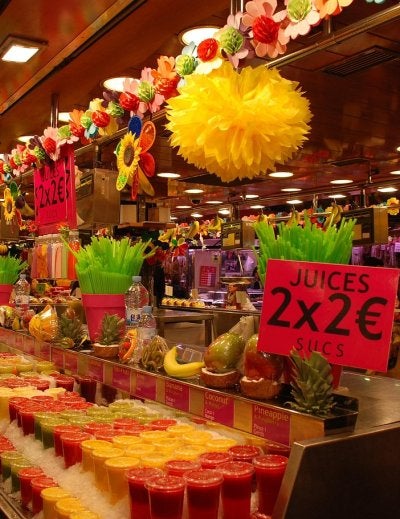
Barcelona’s food scene runs through its markets: La Boqueria and Santa Caterina for produce and prepared food, plus the city’s older granjas and chocolate shops for something slower-paced. Seafood paella by the Barceloneta coast and a traditional Flamenco show round out a culture-focused itinerary.
A specific stop worth building a stroll around is Carrer Petritxol, known locally as “Chocolate Street,” for thick hot chocolate and churros at a historic granja.
Read the full Barcelona food & culture itinerary
Barcelona adventure itinerary
For an itinerary built around the outdoors, the Serra de Collserola Natural Park is Barcelona’s closest large-scale hiking option, covering more than 8,000 hectares of Aleppo pine forest a short trip from the city center.
The signature challenge is the Sant Jeroni trail at Montserrat, a three-to-four-hour climb to the range’s highest peak, with 360-degree views over Catalonia at the top.
Read the full Barcelona adventure itinerary
Luxury Barcelona
Luxury itineraries in Barcelona center on the “Golden Mile” of Passeig de Gràcia, where international designer brands occupy some of the city’s most significant Modernista buildings. These trips typically prioritize private transport, skip-the-line access to major sights, and dining at the city’s top-tier restaurants.
For something outside the main strip, El Born’s independent designers and leather workshops, including Casa Loewe’s original atelier, offer a quieter version of the same high-end shopping.
Read the full Luxury Barcelona itinerary
When to visit Barcelona
| Season | Months | Good for |
|---|---|---|
| Best overall weather | April–June, September–October | Sightseeing without peak heat or crowds |
| Beach season | June–September | Barceloneta and Sitges, warmest water, full beach services |
| Off-peak | November–March | Lower prices, fewer crowds, cooler weather |
You will find more details about this in our deep-dive about the best time to travel to Spain, which can be pretty useful if you want to organize a multi-city tour of the country beyond Barcelona.
How to choose your itinerary
Start with what you actually want from the trip: Gaudí’s architecture, the 1992 Olympic sites, or the hiking trails outside the city. First-time visitors are best served by the three-day itinerary, since it covers the landmarks that anchor most of the other guides on this list. If you’ve already done that trip, a themed deep-dive, whether that’s a single neighborhood like El Born or Gràcia, or a focus like food or budget travel, is the better next step.
Whichever version you pick, our recommendation is to build in unstructured time. Barcelona’s old streets reward getting a little lost.
Barcelona is a strong starting point, but many travelers pair it with broader Spain travel packages that take in more of the country afterward.

Leave a Reply
You must be logged in to post a comment.