

Barcelona in 3 days: the perfect itinerary for a first-time visit
Three days is the amount of time most first-time visitors need to get a real feel for Barcelona. This itinerary moves chronologically through the city’s history: day one covers the Roman and medieval old town, day two covers the Modernista landmarks of the Eixample, and day three moves up to Montjuïc’s viewpoints and Olympic sites before finishing on the coast.
Barcelona in 3 days: itinerary overview
Day 1: Old town and medieval Barcelona
| Time | Stop | What to do |
|---|---|---|
| Morning | Gothic Quarter | Barcelona Cathedral, Roman wall, Temple of Augustus |
| Afternoon | El Born | Picasso Museum, Palau de la Música Catalana |
| Evening | Old City | Flamenco show, tapas tour, Carrer Petritxol |
Day 2: Modernista landmarks
| Time | Stop | What to do |
|---|---|---|
| Morning | Passeig de Gràcia | Casa Batlló, Casa Milà |
| Afternoon | Eixample / Carmel Hill | Sagrada Família, Park Güell |
| Evening | Gràcia or a rooftop bar | Local plazas, or cocktails at Sips/Paradiso |
Day 3: Montjuïc and the coast
| Time | Stop | What to do |
|---|---|---|
| Morning | Montjuïc | Cable car, Montjuïc Castle, Olympic Ring |
| Afternoon | Montjuïc / Barceloneta | MNAC, Port Cable Car down to the beach |
| Evening | Barceloneta | Seafood paella, sunset rooftop, Magic Fountain |
Map: your 3-day Barcelona route
Use this map to see the full three-day route at a glance before diving into the stop-by-stop details below.
Before you go
The Aerobús gets you from the airport to Plaça de Catalunya in about 35 minutes. For getting around the city, check current Metro pass options (Barcelona has been phasing out the T-10 in favor of the T-Casual, or the Hola Barcelona Travel Card for unlimited transit). Book Sagrada Família and Park Güell tickets online well in advance, both sell out their timed-entry slots regularly. Stay alert for pickpockets on Las Ramblas and on the Metro.
Day 1: old town and medieval Barcelona
Morning: the Gothic Quarter
Start in the Gothic Quarter (Barri Gòtic), once encircled by medieval walls. Work through the narrow streets to Barcelona Cathedral, a 13th-century Catalan Gothic building. Inside, the cloister garden is home to 13 white geese, kept in tradition as a symbol of the age at which Santa Eulàlia was martyred. Beyond the cathedral, look for the remains of the Roman wall and the Temple of Augustus, both dating back to the city’s origins as the colony of Barcino.
Afternoon: El Born
Move into El Born, known for its narrow stone alleyways and historic squares. The centerpiece here is the Picasso Museum, spread across five adjoining medieval palaces with a collection of more than 4,000 works focused on Picasso’s formative years. Afterward, tour the Palau de la Música Catalana, the only Art Nouveau concert hall on the UNESCO World Heritage list, known for its ornate floral mosaics and inverted stained-glass skylight.
Evening: flamenco and tapas
Close out day one with a Flamenco show at a tablao such as Tablao Cordobés on Las Ramblas, then a tapas tour through the Old City. Look for patatas bravas, Iberian ham, and montaditos at spots like El Xampanyet or Quimet & Quimet.
Pro tip: Stop at Carrer Petritxol in the Gothic Quarter, the city’s “Chocolate Street,” for hot chocolate and churros at a historic granja like M. Viader.
Day 2: Modernista landmarks
Morning: Casa Batlló and Casa Milà
Start on Passeig de Gràcia at the Block of Discord, where Casa Batlló and Casa Amatller sit side by side. Casa Batlló, nicknamed the “House of Bones” for its skeletal balconies, uses a gradient of blue tiles in the stairwell to spread natural light. A five-minute walk north brings you to Casa Milà (“La Pedrera”), known for its undulating stone facade and sculptural rooftop chimneys.
Afternoon: Sagrada Família and Park Güell
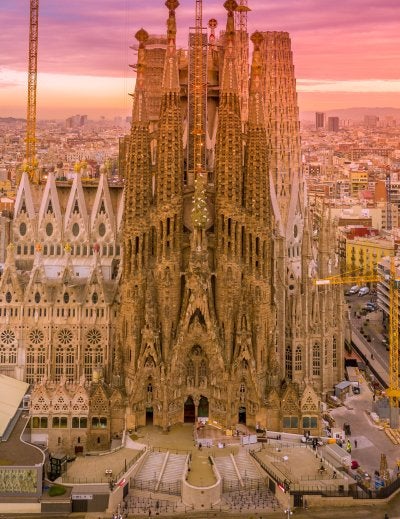
Spend the afternoon at the Sagrada Família, under construction since 1883 and still Gaudí’s defining project. Inside, angled columns branch out like trees, and stained-glass windows scatter shifting color across the interior. From there, head to Park Güell on Carmel Hill. Visit the Dragon Stairway and its mosaic salamander, then the Hypostyle Room’s 86 columns, before resting on the Serpentine Bench, covered in trencadís mosaic.
Evening: Gràcia or a rooftop cocktail
Choose between Gràcia, a former independent village with a bohemian, small-town feel, or a cocktail at a well-known bar like Sips (ranked third in the World’s 50 Best Bars in 2022, later named the World’s Best Bar in 2023) or Paradiso in El Born (the World’s Best Bar in 2022).
Local insight: If daytime slots for Casa Milà are full, the “La Pedrera: Night Experience” offers a rooftop light show as an evening alternative.
Day 3: Montjuïc and the coast
Morning: Montjuïc
Take the cable car up Montjuïc Hill to Montjuïc Castle, a fortress with panoramic views over the city and port. Then head down into the Olympic Ring to see the Estadi Olímpic Lluís Companys, the main stadium of the 1992 Games. Next door, the Joan Antoni Samaranch Olympic and Sports Museum has interactive exhibits where you can test Olympic skills.
Afternoon: MNAC and Barceloneta
Visit the National Art Museum of Catalonia (MNAC), housed in the 1929 Palau Nacional, for its Romanesque frescoes and Modernista decorative arts. Ride the Port Cable Car down to Barceloneta and spend the rest of the afternoon on the beach or the promenade.
Evening: paella and a farewell view
Finish with seafood paella on the coast at a spot like Can Majó or Xiringuito Escribà, then head to a rooftop restaurant such as 360º at Barceló Raval or Terraza Martínez for a sunset view over the city.
Don’t miss: The Magic Fountain at the base of Montjuïc runs a free synchronized water, light, and music show most evenings. Schedules change frequently, so it’s worth confirming the current showtimes closer to your visit.
FAQ: Barcelona in 3 days
Is three days enough to see Barcelona?
Three days covers the old town, the main Modernista landmarks, and Montjuïc with the coast, which is the core of what most first-time visitors want to see. It won’t include day trips to Montserrat or Girona; for that, see the Barcelona in a week itinerary.
How should I split three days in Barcelona?
The most efficient split by theme: day one for the old town and Roman/medieval history, day two for the Eixample’s Modernista landmarks, day three for Montjuïc, the Olympic sites, and the coast.
Do I need to book tickets in advance?
Yes, for the Sagrada Família, Park Güell, Casa Batlló, and Casa Milà. All use timed-entry tickets that sell out, especially June through September.
What should I skip if I only have three days?
Skip day trips to Montserrat, Girona, or Tibidabo. Three days is built around the city center; the wider region needs at least a week.
Catalonia is only one region among the many Spain tours cover, worth keeping in mind if this trip turns into a longer one down the road.
Also worth reading
If your stay is shorter, the Barcelona in 1 day itinerary narrows this route down to the Eixample’s primary landmarks. With more time available, the Barcelona in a week itinerary adds day trips to Montserrat and Girona. If you’re traveling with kids, the Barcelona itinerary for families covers kid-friendly stops like CosmoCaixa and Tibidabo Park. For further trip proposals, we recommend to take a look at our list of itinerary ideas in Barcelona.

Leave a Reply
You must be logged in to post a comment.