Tokyo Neighborhoods Guide: Best Districts to Visit in 2026 & 2027
Tokyo is not a city with neighborhoods. It is a city made of neighborhoods: dozens of distinct districts, each with its own personality, pace, visual language, and reason for being, layered across a metropolitan area of 14 million people and connected by one of the most reliable rail networks on earth.
Walk fifteen minutes in any direction and you feel like you’ve crossed into a different city. The neon-soaked electricity of Shinjuku gives way to the temple incense of Asakusa. The luxury flagship stores of Ginza dissolve into the anime-saturated back streets of Akihabara. The canal-side coffee culture of Nakameguro feels nothing like the vintage-hunting lanes of Shimokitazawa a short train ride away.
That variety is Tokyo’s great gift to travelers, and its great navigation challenge. Rather than listing neighborhoods alphabetically, this guide organizes them by what kind of traveler you are and what kind of day you’re trying to have. Find your match, then follow the links to the full dedicated guide for each district.
Find your neighborhood by travel style
- First trip to Tokyo: The essential districts: Shinjuku, Shibuya, Asakusa, Harajuku. The neighborhoods that define the city’s global image.
- Culture and history: Old Tokyo and the arts: Ueno’s world-class museums, Yanaka’s pre-modern streets, Marunouchi’s Meiji grandeur.
- Food and nightlife: Where Tokyo eats and drinks: Ginza’s Michelin concentration, Roppongi after dark, Shimokitazawa’s curry culture.
- Pop culture and shopping: Anime, fashion, and fandom: Akihabara’s electronic labyrinth, Ikebukuro’s Otome Road, Harajuku’s street fashion epicenter.
- Off the beaten path: The neighborhoods locals love: Shimokitazawa, Koenji, Nakameguro, Kichijoji. Where Tokyo lives when it’s not performing for tourists.
The neighborhoods every Tokyo trip starts with
These are the districts that built Tokyo’s global image. Each one is worth the reputation.
Shinjuku (新宿)
Shinjuku is where Tokyo’s superlatives pile up. The station (handling over 3.5 million passengers a day by some counts, making it the world’s busiest) sits at the center of a district that contains everything at once: the forest of glass towers in Nishi-Shinjuku, the neon-saturated entertainment maze of Kabukicho, the 200-plus tiny bars of Golden Gai, the 300-plus LGBTQ+ bars of Ni-chome, and the 144-hectare expanse of Shinjuku Gyoen national garden where none of that noise reaches you.
For most US travelers arriving in Tokyo, Shinjuku is the first neighborhood that hits at full volume, and it’s where several Exoticca Japan tour packages base travelers. Everything in the city is accessible from here within 20 minutes. The lanterns of Omoide Yokocho, the crowds spilling out of Kabukicho Tower, the jazz bars of Golden Gai at midnight: there is nowhere else in Tokyo quite like it.
Don’t miss: The free observatory on the 45th floor of the Tokyo Metropolitan Government Building gives one of the best 360-degree views in the city at no cost. On clear autumn and winter mornings, Mount Fuji appears on the western horizon. A permanent nighttime drinking ban in Kabukicho has been in effect since October 2024, so the street character is more ordered than it once was, though still vivid.
Best combined with: Harajuku and Omotesando, 20 minutes south on the Yamanote Line, for a single day that moves from Shinjuku’s metropolitan density to Harajuku’s fashion energy.
Shibuya (渋谷)
The Shibuya Scramble Crossing (up to 3,000 people crossing from all directions every time the lights change) is the most photographed intersection in the world, and one of those rare tourist icons that delivers on arrival. It is also just the entrance to a neighborhood whose layers run much deeper: the SHIBUYA SKY observatory at 360 degrees (¥3,000 to ¥3,700), the garden-roofed Miyashita Park, and the Sakura Stage complex that opened in July 2024 with restaurants, shops, and event spaces extending the district’s footprint eastward.
Shibuya was the birthplace of contemporary Japanese youth culture and still radiates that energy, even as the neighborhood has grown more architecturally ambitious. Scramble Square Phase II broke ground in May 2025, with completion expected in 2031, reshaping the eastern skyline further. Exoticca’s Tokyo Shibuya District Walking Tour covers the Crossing, the Hachiko statue, Nonbei Yokocho, and Miyashita Park, which makes a good orientation before exploring on your own.
Practical note: SHIBUYA SKY requires advance online booking, particularly on weekends and evenings. The best views of the Scramble Crossing from above are from the Starbucks on the second floor of the Tsutaya QFront building. Arrive before 9am on weekdays for a window seat without a wait.
Asakusa (浅草)
Asakusa is where Tokyo’s oldest layer survives most intact. Senso-ji (the city’s most visited temple, welcoming around 30 million visitors per year) anchors a district of Edo-period street patterns, traditional craft shops, rickshaws, street food vendors, and the 250-meter Nakamise-dori shopping street leading to the temple gate, where 89 stalls have operated in some form since the 18th century. It is one of the few places in Tokyo where the visual language of pre-modern Japan persists at street level, rather than existing only inside a museum.
Exoticca’s full-day Tokyo City Tour visits Asakusa as one of its anchors, including a matcha tasting, a walk through the temple precinct, and views of the 634-meter Tokyo Skytree, the world’s tallest broadcasting tower, rising above the Sumida River. The Skytree (admission ¥2,100 to ¥3,400 depending on the deck) is best viewed from across the river or from the Kaminarimon gate plaza rather than from the top, where queues can be long. The views from the Tembo Galleria at 450 meters are worth it on clear days.
Don’t miss: Kappabashi-dori, the 170-meter “kitchen street” with around 170 shops selling professional cookware, ceramics, restaurant equipment, and the famous food models used in Japanese restaurant windows. Most shops close on Sundays. The Edo-Tokyo Museum reopened on March 31, 2026, after a multi-year renovation (adults ¥800), and is essential for anyone wanting historical context for what they’re seeing in Asakusa and across the city.
Harajuku and Omotesando (原宿・表参道)
These two adjacent neighborhoods share the same geography but operate on different registers. Harajuku’s Takeshita Street is one of the most concentrated expressions of youth fashion and street culture anywhere in the world: a 350-meter pedestrian lane of independent boutiques, costume shops, crepe stands, and thrift stores whose visual energy has influenced fashion globally. Two minutes’ walk away, Omotesando is Tokyo’s answer to a European luxury boulevard, a broad zelkova-lined avenue where LVMH, Hermes, Prada, and a dozen other global luxury houses have commissioned Japan’s most celebrated architects to build their flagships.
The contrast between Takeshita Street and Omotesando Avenue, achieved in a five-minute walk, is one of the most instructive things you can do in Tokyo. In April 2024, Harakado opened at the Harajuku intersection: a new mixed-use complex with a Kosugiyu bathhouse on the basement floor and further creative retail and exhibition space. Meiji Shrine (the forested Shinto shrine within a 175-acre urban forest at the northern end of Harajuku) is free to enter and provides the counterpoint that makes the neighborhood’s range complete.
Where Tokyo keeps its past and its art
These neighborhoods reward visitors who want to understand the city, not just photograph it.
Ueno (上野)
Ueno Park is the closest thing Tokyo has to a civic center of cultural gravity. Within 133 hectares of parkland, you will find the Tokyo National Museum (the largest museum in Japan, holding over 120,000 objects of Japanese art and archaeology), the National Museum of Western Art (whose Le Corbusier-designed main building is a UNESCO World Heritage Site), the National Museum of Nature and Science, the Ueno Zoo, Shinobazu Pond, and multiple shrines and temples, all within walking distance of each other.
For travelers on Exoticca tours with a free day in Tokyo, Ueno is the most rewarding way to spend it. The Tokyo National Museum alone deserves three hours; the NMWA’s collection of European masters from Rubens to Monet to Rodin justifies another two. The TNM offers free admission on May 19, September 21, and November 3, 2026. A 15-minute walk north of the park brings you into Yanaka, which makes a natural second half to any Ueno day.
Yanaka (谷中)
Yanaka survived both the 1923 Great Kanto Earthquake and the 1945 firebombing campaigns that destroyed most of Tokyo’s traditional wooden urban fabric. What remains is the most intact pre-modern neighborhood in central Tokyo: narrow lanes of machiya townhouses, over 70 Buddhist temples, a 10-hectare cemetery where Tokugawa Yoshinobu (the last shogun) is buried among the zelkova trees, and the Yanaka Ginza, a 170-meter traditional shopping street of about 60 shops whose residents buy tofu, pickles, and fish alongside the visitors who’ve found their way here.
Yanaka is part of the “Yanesen” circuit, the informal grouping of three adjacent traditional neighborhoods (Yanaka, Nezu, Sendagi) that together form the most concentrated surviving area of Edo-period Tokyo street character. If you arrive in Tokyo via the Keisei Skyliner from Narita Airport (41 minutes to Nippori, ¥2,570), Yanaka is five minutes’ walk from the station: one of the more direct arrivals into an authentic Tokyo neighborhood available to air travelers.
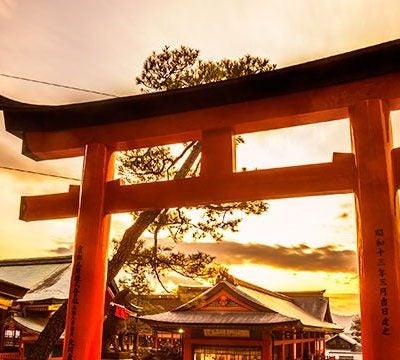
In April: The Nezu Shrine Azalea Festival runs April 1 through April 30 annually, filling the hillside garden with over 2,000 azalea bushes in bloom. The series of vermilion torii gates ascending the hillside draws comparisons to Kyoto’s Fushimi Inari, with considerably fewer crowds. Entry to the azalea garden is ¥500.
Marunouchi and the Imperial Palace (丸の内)
Marunouchi is Tokyo’s financial and administrative heart: the neighborhood of red-brick Meiji-era buildings along the station approach, glass towers of the business district, and the green moats and stone walls of the Imperial Palace East Gardens at its center. The gardens are free and open to the public, closed Mondays and Fridays. Free guided tours of the palace grounds run Tuesday through Saturday at 10:00am and 1:30pm; register in advance at sankan.kunaicho.go.jp. The KITTE shopping complex’s free rooftop garden overlooks the Marunouchi brick facade of Tokyo Station below, which makes it one of the better free viewpoints in the city.
The Oedo Antique Market operates here on the first and third Sundays of each month in the plaza in front of the International Forum. Over 250 dealers bring furniture, ceramics, textiles, prints, and objects from across Japan’s history. For travelers who want to take home something old and Japanese rather than mass-produced, this is the right place to look.
Where Tokyo eats, drinks, and stays up late
Tokyo has more Michelin-starred restaurants than any city on earth. These are the neighborhoods where that fact is felt most directly.
Ginza (銀座)
Ginza is Tokyo’s oldest and most prestigious commercial district, the city’s luxury retail center, with a Michelin star concentration ranging from long-established kaiseki restaurants to the Tokyo outpost of Joel Robuchon and a dozen other international names. The Kabukiza Theatre offers single-act tickets (¥500 to ¥2,000) purchased on the day at the fourth-floor gallery entrance, which is an accessible way to experience kabuki theater without committing to a full four-hour program. The fourth-floor box office is cash only.
Ginza Sony Park reopened in January 2025 as a free-entry cultural venue with rotating exhibitions and events every two to three months; check ginzasonypark.jp for the current program. The 11-floor Itoya stationery store is one of the world’s great stationery destinations. Tsukiji Market (the famous outer market of food stalls and fresh seafood, distinct from the relocated Toyosu wholesale market) is a 12 to 15 minute walk south and remains the best place in Tokyo to eat fresh tuna in the morning before crowds arrive.
Roppongi (六本木)
Roppongi operates on two registers that happen to share a geography. By day, it is one of Tokyo’s most significant art destinations: the Mori Art Museum on the 52nd floor of Roppongi Hills Mori Tower, open until 10pm most nights, hosts major international exhibitions, including Ron Mueck through September 23, 2026. The National Art Center Tokyo has the largest exhibition space of any art museum in Japan. TeamLab Borderless, now relocated to Azabudai Hills, drew 1.69 million visitors in 2025 and remains one of the most visited contemporary art installations in the world at ¥3,800 per adult.
By night, Roppongi has long been Tokyo’s most international nightlife district, a legacy of the postwar US military presence that still gives the area its mixed local and expatriate character. For travelers staying in central Tokyo, the Roppongi-to-Ginza axis (five minutes on the Metro Hibiya Line) is the most compact combination of world-class art and world-class dining in the city.
Shimokitazawa for food (下北沢)
Shimokitazawa has a well-earned reputation as Tokyo’s bohemian neighborhood, but its most specific food identity is curry. The concentration of independent curry restaurants here (keema curry, Sri Lankan curry with multiple condiments, Ayurvedic curry, South Indian spice-forward styles) is unlike any other neighborhood in the city. Each restaurant has been perfecting a single approach for years. The annual Shimokitazawa Curry Festival (October, check shimokitazawa.or.jp) is one of the more enjoyable food events in Tokyo, with festival passports (¥500 per dish) letting you work through four or five different styles in an afternoon.
The café culture here is also worth a dedicated visit. This is not the corporate third-wave presentation of some other Tokyo districts, but an idiosyncratic mix of jazz cafes, vinyl-and-espresso bars, and coffee roasters in converted houses. After dinner, the approximately 20 live houses within a 15-minute walking radius of the station make Shimokitazawa the best neighborhood in Tokyo for live music at ground level, with most shows running from 7pm to 10pm and tickets at ¥1,500 to ¥3,500 including a drink.
Anime, fashion, fandom, and the world’s best retail
Nowhere does consumer culture more imaginatively than Tokyo. These are the neighborhoods where that imagination is most concentrated.
Akihabara (秋葉原)
Akihabara began as Tokyo’s postwar black market for electronic components and evolved, through the 1980s personal computer boom and the 1990s anime explosion, into the global capital of electronics and Japanese pop culture. The main strip of Chuo-dori is lined with multi-floor electronics retailers, led by Yodobashi Camera’s main Akihabara store at eight floors and 60,000 square meters, with every side street containing specialist shops for anime merchandise, retro video games, maid cafes, garage kits, and electronic components with no counterpart anywhere else in the world.
On Sundays between 1pm and 5pm (extended to 6pm from April through September) the main street becomes a pedestrian zone, which is one of the better times to experience the neighborhood at its most concentrated. The Gachapon Hall and the Radio Kaikan building are the best starting points for first-timers. One navigation note: Yodobashi Camera is on the opposite side of the station from the Electric Town Exit, which catches a lot of first-time visitors off guard.
Ikebukuro (池袋)
Ikebukuro is the counterpart to Akihabara that most visitors never find. Where Akihabara developed around male-oriented anime and electronics culture, Ikebukuro developed in parallel as the center of female-oriented pop culture: the fujoshi and otome culture of Otome Road, with its Boys’ Love manga, male idol goods, and the world’s largest Animate store at 10 floors. The Sunshine City complex in East Ikebukuro contains the Sunshine Aquarium (famous for its “Penguins in the Sky” outdoor rooftop exhibit), the SKY CIRCUS observatory at 251 meters (¥1,200), the world’s largest Pokemon Center, and the world’s largest Gashapon Department Store with 3,000 to 4,000 capsule toy machines.
The Warner Bros. Studio Tour Tokyo: The Making of Harry Potter opened in June 2023, 17 minutes from Ikebukuro on the Seibu Ikebukuro Line, on the former site of Toshimaen amusement park. The first Harry Potter Studio Tour in Asia, it features the Hogwarts Great Hall, Diagon Alley, Platform 9 3/4, and the world’s largest Butterbeer Bar. All tickets require advance booking at wbstudiotour.jp/en. The current seasonal event “Invitation from Hogwarts” runs through September 6, 2026.
One thing to know about Ikebukuro: Tobu Department Store, whose name contains the kanji for “east,” is at the West Exit. Seibu Department Store, whose name contains the kanji for “west,” is at the East Exit. Each company named its store for its commuter rail line rather than its station exit. It is confusing until it isn’t, which is a fairly good description of Tokyo in general.
The neighborhoods where Tokyo actually lives
These are the districts that Tokyoites consistently rank as their favorites to live in, and where the city’s daily character is most visible. None require a full day; all reward an afternoon.
Nakameguro (中目黒)
Nakameguro is built around the 3.8-kilometer Meguro River canal, lined with 800 cherry trees. In blossom season (late March to early April), approximately 3 million people come for the lantern-lit canal, which is one of the most photographed images in Japan. Year-round, it is the neighborhood of the Starbucks Reserve Roastery Tokyo (the most architecturally ambitious Starbucks in the world, designed by Kengo Kuma across four floors overlooking the canal, walk-in only, open 7am to 11pm), specialty coffee at Onibus and % ARABICA, and independent boutiques along the canal banks. The Daikanyama T-Site Tsutaya bookshop, a 15-minute walk north and open daily until midnight, is the best browsable design bookshop in the city.
Accessible from Shibuya in five minutes on the Tokyu Toyoko Line, or from Roppongi in five minutes on the Metro Hibiya Line. The 2026 cherry blossom festival was held March 28 to 29; check local listings for current-year dates, as peak bloom shifts by 2 to 3 weeks from year to year.
Shimokitazawa (下北沢)
Tokyo’s bohemian quarter has approximately 200 vintage and second-hand clothing shops (Japan’s largest concentration), along with 20 live houses representing roughly 8% of Tokyo’s total live music venues, independent curry restaurants, jazz cafes, and the Bonus Track complex (2020, Toyo Ito Award for Architecture), all within a 10-minute walk of the station. Most shops open around noon. Three minutes from Shibuya on the Keio Inokashira Line.
The Shimokitazawa Curry Festival runs in October annually; check shimokitazawa.or.jp for current dates. It is one of Tokyo’s most distinctively local food events and worth timing a visit around if October is available.
Kichijoji (吉祥寺)
Kichijoji is consistently voted Tokyo’s most desirable neighborhood to live in. Inokashira Park (35 hectares, free entry, with rowing boats available for ¥700 per 30 minutes and some of the best cherry blossoms in west Tokyo) anchors the district. The Ghibli Museum, designed by Hayao Miyazaki himself and showing exclusive short films not available anywhere else, requires tickets booked on the 10th of the previous month at 10am Japan Standard Time via Lawson Ticket (l-tike.com). They sell out within minutes. Adults ¥1,000. The current exhibition, “Yamawaki Yuriko’s Workroom,” runs through May 2027.
In the evening, Harmonica Yokocho (a network of around 70 tiny bars north of the station, named for the harmonica-like layout of its alleys) is the most atmospheric small-venue drinking environment in west Tokyo. Most bars open from 5pm or 6pm. Fifteen minutes from Shibuya on the Keio Inokashira Line.
Koenji (高円寺)
Koenji is the birthplace of Japanese punk rock and Tokyo’s most durably subcultural neighborhood: over 200 vintage shops at lower prices than Shimokitazawa, with an aesthetic that leans toward 1970s and 1980s American punk, rockabilly, and psychedelic. The Koenji Awa Odori, held on the last Saturday and Sunday of August annually, draws approximately one million visitors over two days to watch over 10,000 performers dance the traditional Awa Odori through the streets. It is Japan’s second-largest Awa Odori festival and free to watch from the street. Check koenjiawaodori.com for current-year dates.
Nine minutes from Shinjuku on the JR Chuo Line. Take the local service (各駅停車), as the rapid trains do not stop at Koenji.
More neighborhoods to explore
These districts each have a specific reason to visit. Dedicated guides for each are coming soon.
- Daikanyama (代官山): Upscale, quiet, and design-forward. The T-Site Tsutaya bookshop (Klein Dytham Architecture, open until midnight) is the best browsable bookshop in the city. Fifteen minutes’ walk from Nakameguro.
- Ebisu (恵比寿): A quiet, affluent residential neighborhood between Shibuya and Nakameguro. Yebisu Garden Place (the 1994 redevelopment of the old Sapporo Brewery site) contains the Tokyo Metropolitan Museum of Photography and makes a natural complement to a Nakameguro visit.
- Odaiba (お台場): The futuristic artificial island in Tokyo Bay. The life-size Unicorn Gundam statue, the Fuji TV headquarters building, and panoramic Rainbow Bridge views make it a solid family half-day. TeamLab’s original Borderless venue was here before the move to Azabudai Hills.
- Yanesen circuit (谷根千): The informal grouping of Yanaka, Nezu, and Sendagi: three adjacent traditional neighborhoods that together form the most concentrated surviving area of Edo-period Tokyo street character. Allow a full half-day for the complete circuit from Nippori to Nezu Station.
- Sangenjaya (三軒茶屋): A dense cluster of bars, live houses, and independent restaurants around the Tokyu Den-en-toshi Line station. Tokyo’s younger creative population has been moving here as Shimokitazawa’s rents have climbed.
Plan your Tokyo trip with Exoticca
Exoticca’s Japan vacation packages include flights from major US cities, hotels, guided tours, and transfers. Tokyo is included in all Japan itineraries, from 9-day essentials to 17-day multi-country journeys. Packages start from $1,799 per person with flights included.
Browse Exoticca’s Japan vacation packages
Getting around Tokyo’s neighborhoods
The train network
The Tokyo Metro and JR Yamanote Line connect every neighborhood in this guide. A single-day Metro pass (¥600 adults) covers unlimited rides on all Metro lines. The Yamanote Line loops the city’s central districts. Allow 20 to 30 minutes between any two major neighborhoods.
IC card (Suica or Pasmo)
Pick up an IC card at any major station, load it with cash, and tap in and out of every train, subway, and most buses. It also works at convenience stores and most vending machines, and is the most useful piece of travel infrastructure in Japan.
Getting from the airports
From Narita: the Keisei Skyliner to Nippori takes 41 minutes and costs ¥2,570, and is the best option for travelers heading to Yanaka and northeast Tokyo. The Narita Express (N’EX) reaches Shinjuku or Shibuya in around 80 minutes. From Haneda: the Keikyu Line to Shinagawa takes 13 minutes (¥310), then the JR Yamanote Line continues to whichever neighborhood you’re staying in.
When to go
Cherry blossom season (late March to early April) transforms Nakameguro, Ueno, and Inokashira Park. Autumn (October to November) brings spectacular foliage across the city. Summer (July to August) is hot and humid but brings major festivals, including the Sumida River Fireworks on July 25, 2026. January and February are the cheapest months to travel and often the clearest for Mount Fuji views from Shinjuku and elsewhere.
Cash and cards
Japan remains significantly cash-dependent. Major stores, hotels, and chain restaurants accept cards; many independent shops, market stalls, temple admission desks, and small restaurants are cash only. Carry at least ¥5,000 to ¥10,000 in cash at all times. 7-Eleven ATMs reliably accept foreign cards.
Book these in advance
- Ghibli Museum: Via Lawson Ticket (l-tike.com), released on the 10th of the previous month at 10am JST. Tickets sell out within minutes.
- Warner Bros. Studio Tour Tokyo: Via wbstudiotour.jp/en. Advance booking is required, not optional.
- SHIBUYA SKY observatory: Online booking recommended for evenings and weekends.
- Kabukiza Theatre: Single-act tickets are available on the day at the fourth-floor gallery box office (cash only). No advance booking needed, but arrive early on popular dates.