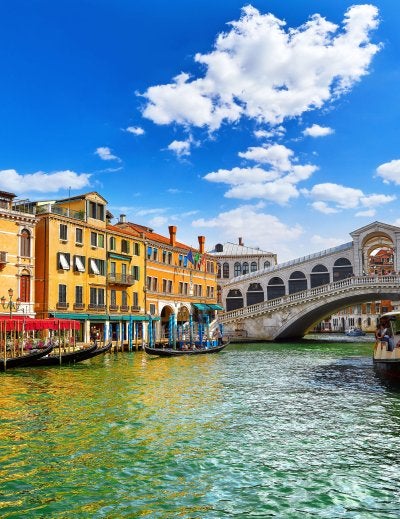
Travel Guide to the Peggy Guggenheim Collection, Venice
The Peggy Guggenheim Collection, located in the elegant Palazzo Venier dei Leoni on Venice’s Grand Canal, is one of Italy’s most significant museums dedicated to 20th-century European and American art. Once the home of the iconic art collector Peggy Guggenheim, it now forms part of a global network of Guggenheim museums, alongside those in New York, Bilbao, and Abu Dhabi.
The palazzo, found at Dorsoduro 701, sits between the Accademia Bridge and the Church of Santa Maria della Salute. Built in the 18th century, it is famous for its unfinished facade, a detail that adds to its charm and mystery. For art lovers exploring Things to do in Venice, the Peggy Guggenheim Collection is an essential stop.
Planning Your Visit
The museum is open daily from 10 am to 6 pm, except on Tuesdays and December 25. The ticket office closes at 5 pm, and the last entry is at the same time.
Admission Fees
- Adults: approximately €16 (around $23 CAD)
- Students (under 26 with ID): €9
- Seniors (over 70): €14
- Children under 10: free
Because admission is limited, it’s best to buy tickets online ahead of time, especially during the high season.
Free and Discounted Admission
Free access is available for:
- Visitors with disabilities and their care partners.
- Visitors who are blind or visually impaired and their companions.
- Venetian citizens during the Madonna della Salute celebrations (November 19–23).
- Venice residents, those born in the city, and university students every Thursday from 2 pm to 6 pm.
Getting There
The museum is easy to reach by vaporetto (water bus) via Venice’s ACTV public transport network.
By Vaporetto:
- From Piazzale Roma or Santa Lucia train station: take Line 2 (direction Lido, Accademia stop) or Line 1 (direction Lido, Accademia or Salute stops).
- From St. Mark’s Square: take Line 2 (direction Piazzale Roma, Accademia stop) or Line 1 (direction Piazzale Roma, Salute or Accademia stops).
The museum is just a few minutes’ walk from the Accademia Bridge, in the peaceful Dorsoduro district.
Exploring the Collections
The Peggy Guggenheim Collection (Permanent Display)
This core collection celebrates the most influential artistic movements of the 20th century, including Cubism, Surrealism, Futurism, and Abstract Expressionism.
Highlights include works by Pablo Picasso, Salvador Dalí, Jackson Pollock, René Magritte, and Wassily Kandinsky.
Key pieces on display:
- The Angel of the City (1948) by Marino Marini, welcoming visitors in the courtyard.
- Alchemy (1947) by Jackson Pollock, showcasing his pioneering drip technique.
- The Empire of Light (1950) by René Magritte, combining night and day in one image.
- Upward (1929) by Kandinsky, a vivid geometric abstraction.
The museum also features collections of African, Oceanic, and Pre-Columbian art.
The Schulhof Collection
Housed in the museum’s barchessa, this section highlights post-war art through the 1980s. It includes works by Andy Warhol, Mark Rothko, Cy Twombly, and Donald Judd, representing styles like Pop Art and Minimalism.
The Nasher Sculpture Garden
A tranquil green space where art and nature meet, the sculpture garden features works by Henry Moore, Alexander Calder, and Jean Arp. It’s also Peggy Guggenheim’s final resting place, where she lies beside her fourteen Lhasa Apso dogs.
Current and Upcoming Exhibitions
The museum also hosts temporary exhibits alongside its permanent collection.
- Ongoing: Manu-Facture: The Ceramics of Lucio Fontana (October 11, 2025 – March 2, 2026)
- Upcoming: Peggy Guggenheim in London: The Making of a Collector (April 25 – October 19, 2026)
Accessibility and Inclusion
The Peggy Guggenheim Collection ensures accessibility for all visitors.
- Wheelchairs and baby strollers are available free of charge.
- Platform lifts connect various levels, including the garden and café.
- Service animals are welcome.
The museum also runs Double Meaning: A Tactile Journey, a program designed for visitors who are blind or visually impaired. It features tactile reproductions of artworks, Braille texts, and guided tours that can be booked in advance by emailing doppiosenso@guggenheim-venice.it.
Tours, Services, and Workshops
Guided tours are offered every weekend at 11 am, and private tours can be arranged by appointment. Free Art Talks take place daily, introducing visitors to Peggy’s life and the history of the collection.
Audio guides are available for €7 in multiple languages. The museum also organizes educational programs and creative workshops, including Kids Day, where children can engage with modern art in fun, hands-on ways.
Dining and Shopping
- Museum Café: Managed by the Venetian restaurant Ai Gondolieri, the café offers light meals, desserts, and drinks with views of the Grand Canal.
- Museum Shops: Two shops, one inside and one outside, offer books, prints, and design pieces inspired by the art on display.
Visitor Policies
To maintain a comfortable atmosphere for everyone:
- Large bags and luggage must be checked at the cloakroom.
- Proper attire is required.
- Food and drink are not permitted inside.
- Photography is allowed for personal use without flash.
- Sketching is allowed with pencils only.
- Running, loud noise, or disruptive behaviour is not tolerated.
Contact Information
- General Information: +39 041 2405 411 | info@guggenheim-venice.it
- Visitor Services: +39 041 2405 440 / 419 | visitorinfo@guggenheim-venice.it
- Tactile Tours: +39 041 2405 444 / 401 | doppiosenso@guggenheim-venice.it
- Guided Tours: booking@guggenheim-venice.it
Behind the Collection: The Stories That Shaped It
The Peggy Guggenheim Collection is more than an art museum, it’s a story of resilience, creativity, and reinvention.
Peggy Guggenheim’s Life and Legacy
Born into a wealthy New York family, Peggy’s life was marked by tragedy and defiance. After losing her father aboard the Titanic, she built her own legacy in the art world, championing avant-garde artists in Europe and the US. Her relationships with figures like Marcel Duchamp and Max Ernst deeply influenced her vision of modern art.
The Unfinished Palace
The Palazzo Venier dei Leoni was designed in the 18th century but never completed. Before Peggy acquired it, it was home to colourful characters like the Marchesa Luisa Casati, who kept exotic animals and hosted wild parties, and Doris Castlerosse, a British socialite known for her high-society scandals.
The Angel of the City
Marino Marini’s bronze sculpture The Angel of the City greets visitors at the entrance. Legend has it that the statue’s detachable penis was once stolen during a party, prompting Peggy to have it permanently reattached, a story that captures her playful spirit.
Art Saved from War
During World War II, Peggy risked her life to protect her collection and the artists she supported. The Louvre famously declined to store her paintings, dismissing them as “not worth saving”. Undeterred, she smuggled her artworks to New York, ensuring their survival.
A Lasting Controversy
When Peggy died in 1979, she left her collection to the Solomon R. Guggenheim Foundation with the condition that it remain in her Venetian home. Decades later, family members contested how her legacy was managed, but her vision of sharing art with the world lives on.
Conclusion
The Peggy Guggenheim Collection isn’t just a museum, it’s a living reflection of its founder’s unconventional life and enduring passion for art. From Pollock’s bold canvases to the serene garden where Peggy rests, every detail of the palazzo tells a story of rebellion, vision, and creativity.
For Canadian travellers planning a trip to Venice, this museum is a must-see cultural landmark and one of the most inspiring things to do in Venice.